 Part Machining / Mould
 Sheet Metal / Hand Plate
Customize&Volume Production
Service:+86-755-23208040
Project:+86-18028781979
Part Machining / Mould 
 2026-06-13
 672
Share:
672
Share:


How Are AI Robots Made?
I. Hardware Assembly: Building the Robot’s Skeleton

The first step in manufacturing an AI robot is to assemble the physical hardware body, which serves as the foundation for all of the robot’s functions. Based on the robot’s intended use case, the R&D team selects and integrates the corresponding core hardware components, which primarily include the main control chip, various sensors, drive motors, mechanical structures, and the power supply system. Sensors act as the robot’s senses, responsible for collecting environmental data such as visual, auditory, distance, and temperature information; the main control chip serves as the central brain, handling fundamental data processing tasks; while motors and mechanical joints enable the robot to perform physical actions such as walking, grasping, and rotating. Technicians assemble each component with precision according to modular architecture standards, strictly controlling assembly accuracy to prevent issues such as mechanical jamming or hardware misalignment. After assembly is complete, basic power-on testing is conducted to ensure all hardware devices power on normally and operate stably, laying a solid hardware foundation for the subsequent integration of intelligent systems.
II. Algorithm Integration: Endowing the Robot with an Intelligent Brain
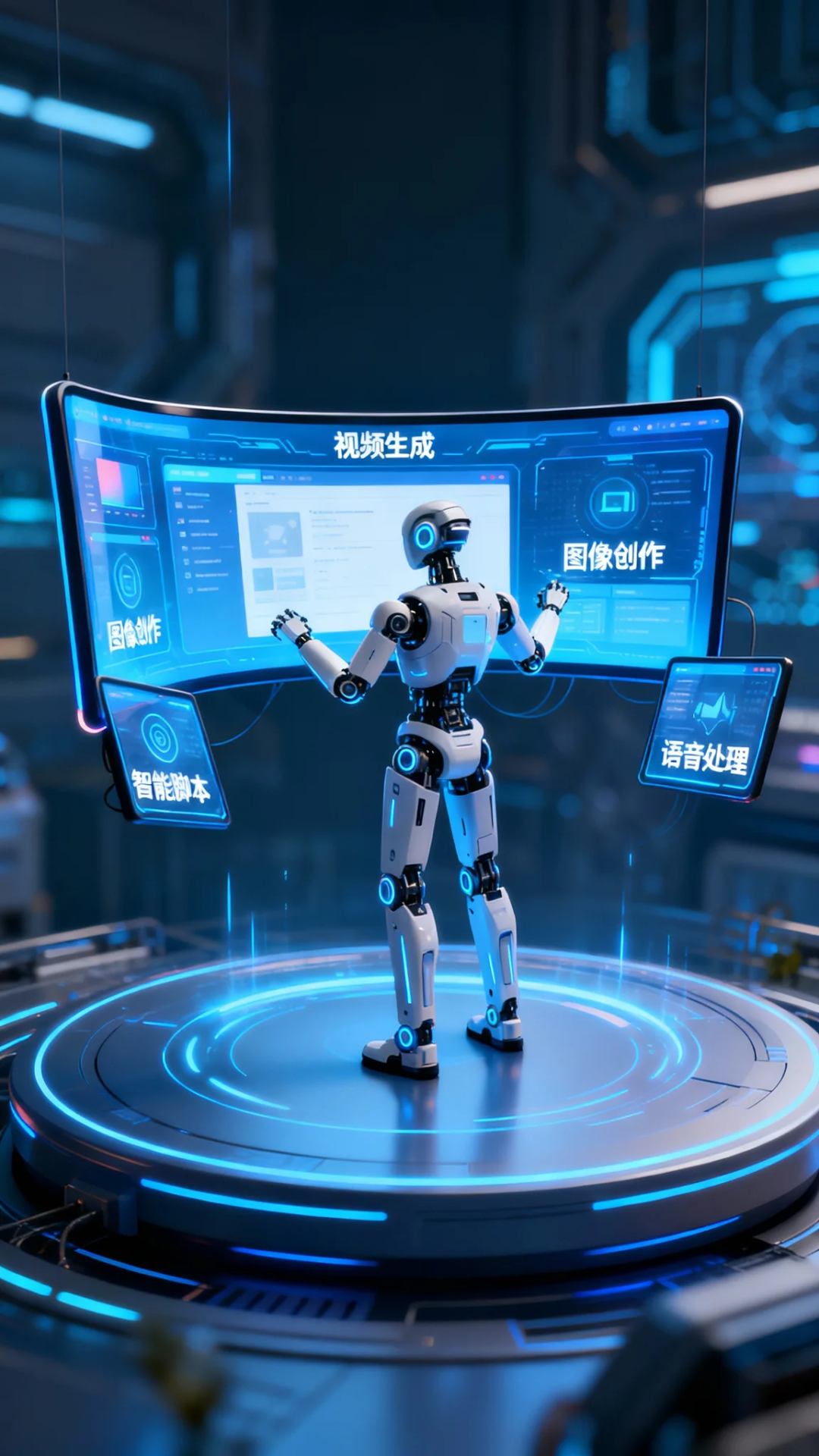
Once the hardware framework is complete, the core step is to integrate AI algorithms and programs into the robot, endowing it with the ability to think and make judgments. R&D personnel will build three core software modules—perception, decision-making, and control—based on the robot’s operating system. First, vast amounts of scenario data are inputted and repeatedly trained using machine learning and deep learning algorithms, enabling the robot to recognize objects, understand speech, and assess its environment. Simultaneously, technicians write custom control programs to define the robot’s behavioral logic and plan core functions such as path planning, human-robot interaction, and intelligent obstacle avoidance. For robots with different applications, specialized algorithm models are further optimized—for example, service robots prioritize interaction algorithms, while industrial robots focus on precision operation algorithms. Only through repeated data iteration and model optimization can the robot break free from the constraints of fixed programming and possess autonomous perception and independent judgment capabilities.
III. Debugging and Optimization: Ensuring Stable Deployment of the Complete System
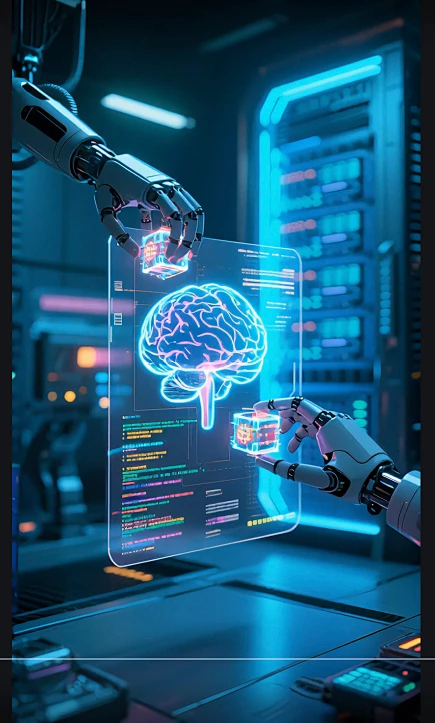
Once hardware and software integration is complete, the final critical step is comprehensive debugging and optimization to ensure the AI robot adapts to real-world usage scenarios. Debugging consists of two phases: simulation testing and real-world testing. First, a simulation platform is used to model various complex scenarios to test the robot’s response speed, decision-making accuracy, and operational stability, while identifying issues such as program bugs and algorithmic deviations. Subsequently, the robot is deployed in real-world environments to test its practical performance in human-robot interaction, motion control, and environmental adaptation. For issues such as slow response times, recognition errors, or movement deviations, algorithm parameters and hardware adaptation modes are fine-tuned. Concurrently, staff refine safety protocols to mitigate operational failure risks and ensure the equipment’s safe and stable operation. Only after multiple rounds of iterative optimization, performance testing, and compliance verification is a fully functional, intelligent, and stable AI robot considered officially manufactured.
Industrial Robot Rapid Prototyping Technology Co., Ltd. is available 24/7 to serve you! We welcome your inquiries!
Company:SHENZHEN INDUSTRIALMAN PRODUCT RP&M CO., LTD
TEL Service:+86-755-23208040
Mobile:+86-18028781979(Manager Ruan)
Email:sales@gyrmodel.com QQ:312520366
Address:DEFG, 19/F, Ruijun Bldg, Zhongxin Road #108,Xinqiao Baoan Area,Shenzhen City,China
Factory address of Humen:Building 6, No. 9 Pujiang Road, Daning Community, Humen Town, Dongguan City
Factory address of Hubei:No.2 Guanggu Avenue, Tieshan District, Huangshi City, Hubei Province


Tiktok


 English


 Consult now


