 Part Machining / Mould
 Sheet Metal / Hand Plate
Customize&Volume Production
Service:+86-755-23208040
Project:+86-18028781979
Part Machining / Mould 
 2025-12-06
 808
Share:
808
Share:


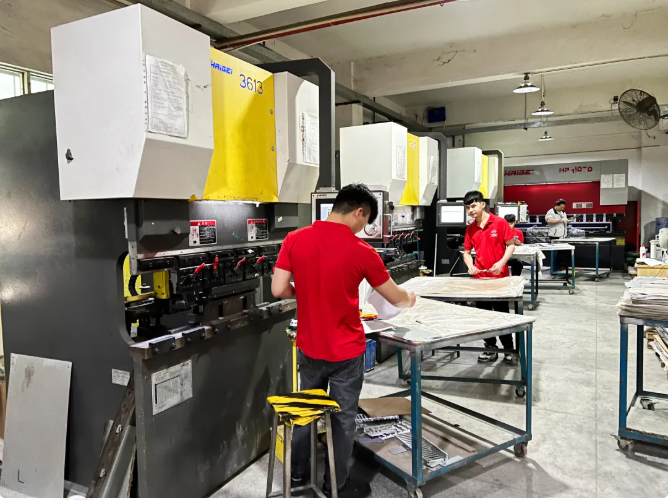
Automotive stamping is a core manufacturing process in vehicle production. By applying pressure to sheet metal through dies, it achieves plastic deformation to form structural body components. Renowned for its high efficiency and precision, this process enables mass production of complex parts like doors and hoods, significantly advancing vehicle lightweighting. Material selection is critical during stamping. The use of high-strength steel and aluminum alloys enhances component durability while reducing overall vehicle weight. Technological advancements have enabled digital design to optimize die development, minimizing material waste. Automated production lines ensure consistency and shorten production cycles. Stamping not only supports the automotive industry's demands for safety and economy but also drives innovation in new energy vehicles, establishing itself as an indispensable precision manufacturing foundation for the modern automotive industry.
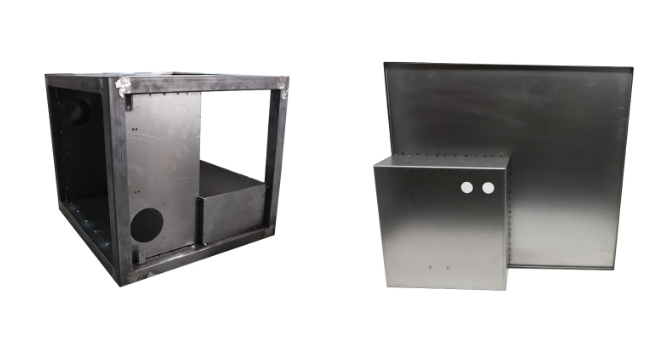
Surface finishing processes play a crucial role in metal fabrication, where sheet metal is shaped into desired forms and surface effects through pressure applied by stamping equipment. Common surface treatments include polishing, brushing, and sandblasting, enhancing both product aesthetics and functionality. Polishing yields mirror-like smoothness for enhanced visual appeal; brushing creates subtle textures for improved tactile feel; while sandblasting imparts a matte finish alongside increased abrasion resistance. These techniques are widely applied in automotive, electronics, and home appliance industries—such as for car body panels and smartphone casings. Surface treatments not only improve product aesthetics but also increase corrosion resistance and longevity. With technological advancements, eco-friendly surface treatments are emerging as a trend, driving the industry toward greater efficiency and sustainability.
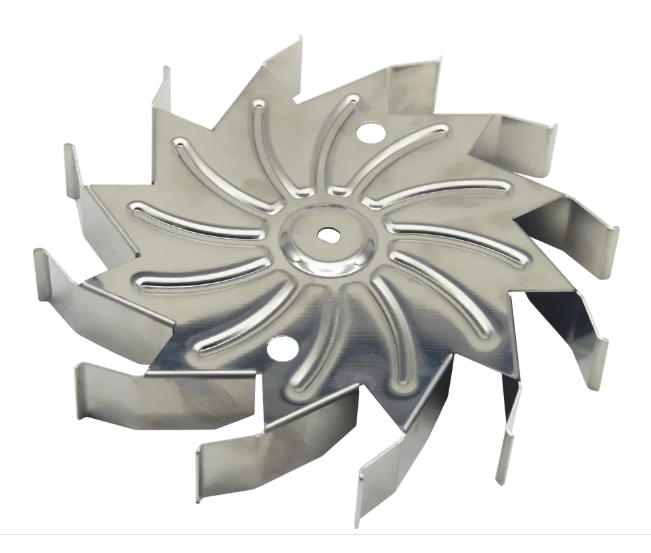
Sheet metal bending involves applying external force to metal plates using pressure equipment, causing plastic deformation to achieve desired angles and shapes. This process requires precise control over bending sequence, angle compensation, and material springback to ensure dimensional accuracy of workpieces. Modern CNC bending machines significantly enhance production efficiency for complex parts through high repeatability and intelligent programming systems. During processing, material properties (such as aluminum alloy ductility and stainless steel strength) and die selection must be comprehensively considered to prevent cracking or deformation. Common applications include industrial components like enclosure housings, brackets, and ventilation ducts. With the advancement of smart manufacturing, automated bending lines integrated with CAD/CAM software are emerging as an industry trend. This drives sheet metal processing toward greater efficiency and flexibility, meeting diverse production demands.
ShenZhen Industrial Man Product RP&M CO., LTD is at your service 24 hours a day! Feel free to contact us!
Company:SHENZHEN INDUSTRIALMAN PRODUCT RP&M CO., LTD
TEL Service:+86-755-23208040
Mobile:+86-18028781979(Manager Ruan)
Email:sales@gyrmodel.com QQ:312520366
Address:DEFG, 19/F, Ruijun Bldg, Zhongxin Road #108,Xinqiao Baoan Area,Shenzhen City,China
Factory address of Humen:Building 6, No. 9 Pujiang Road, Daning Community, Humen Town, Dongguan City
Factory address of Hubei:No.2 Guanggu Avenue, Tieshan District, Huangshi City, Hubei Province


Tiktok


 English


 Consult now


